What it includes
Specification of the control panel, loops or zones, detectors, call points, alarm devices, input and output modules, power supplies, cabling, interfaces, layouts, diagrams and cause-and-effect matrix where applicable.
 Comandos EngenhariaElectrical Design and Installations
Detect, alert and act
Detection and alarm systems designed to identify a fire early and support an organised building response.
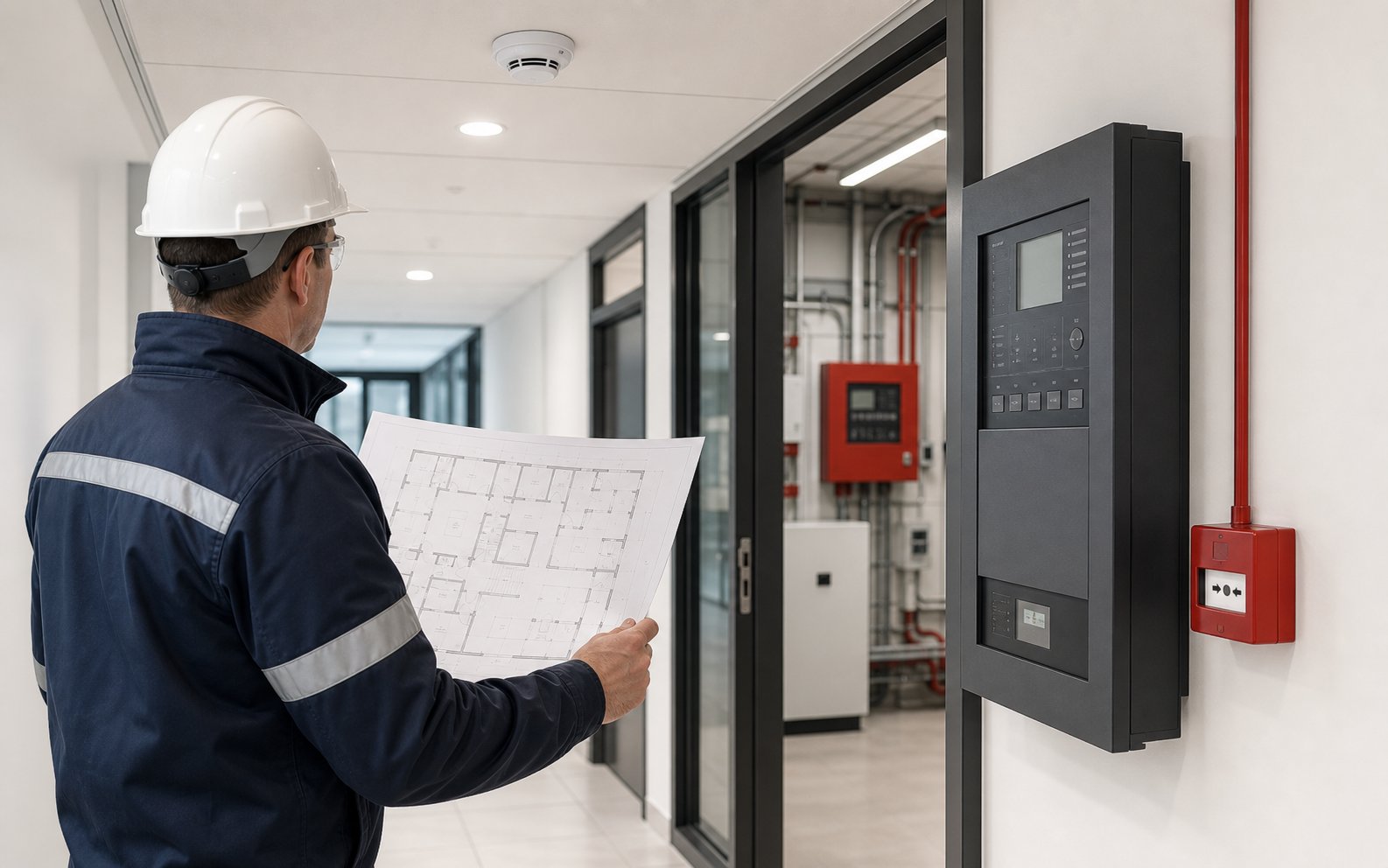
Active protection
The automatic fire detection system (SADI) monitors spaces through detectors, manual call points and a control panel that receives, interprets and signals events. The design establishes the system architecture and how equipment communicates and operates.
In addition to alarms, controls and interfaces may connect to doors, lifts, ventilation and smoke control, technical shutdowns or other systems defined in the fire safety strategy.
Specification of the control panel, loops or zones, detectors, call points, alarm devices, input and output modules, power supplies, cabling, interfaces, layouts, diagrams and cause-and-effect matrix where applicable.
Detector selection and layout depend on risk, height, environment, ventilation and sources of interference. Zoning, power supply, standby duration, supervision and cause-and-effect logic must align with the SCIE strategy and building use.
Cause and effect
An effective system is more than a network of detectors. Each scenario needs a defined response: which alarm devices operate, which doors release, which equipment stops and which signals are transmitted. This logic must be documented, testable and coordinated.
Frequently asked questions
Architectural drawings, intended use of spaces, occupancy, heights, specific risks, equipment to be controlled and existing fire safety information.
It can be included in the lighting design and coordinated with SCIE, ensuring consistency with escape routes and exits.
Yes, based on a survey and available documentation, to assess alterations, extensions or the need to reorganise the system.
Initial assessment
Share the building's intended use and available safety information.