What we inspect
Connections and terminations, busbars, circuit breakers, fuses, contactors, cables, drives, transformers and other accessible components, depending on the installation and safety conditions.
 Comandos EngenhariaElectrical Design and Installations
Evidence-based maintenance
Thermal camera inspection to locate abnormal heating, document equipment condition and guide maintenance priorities.
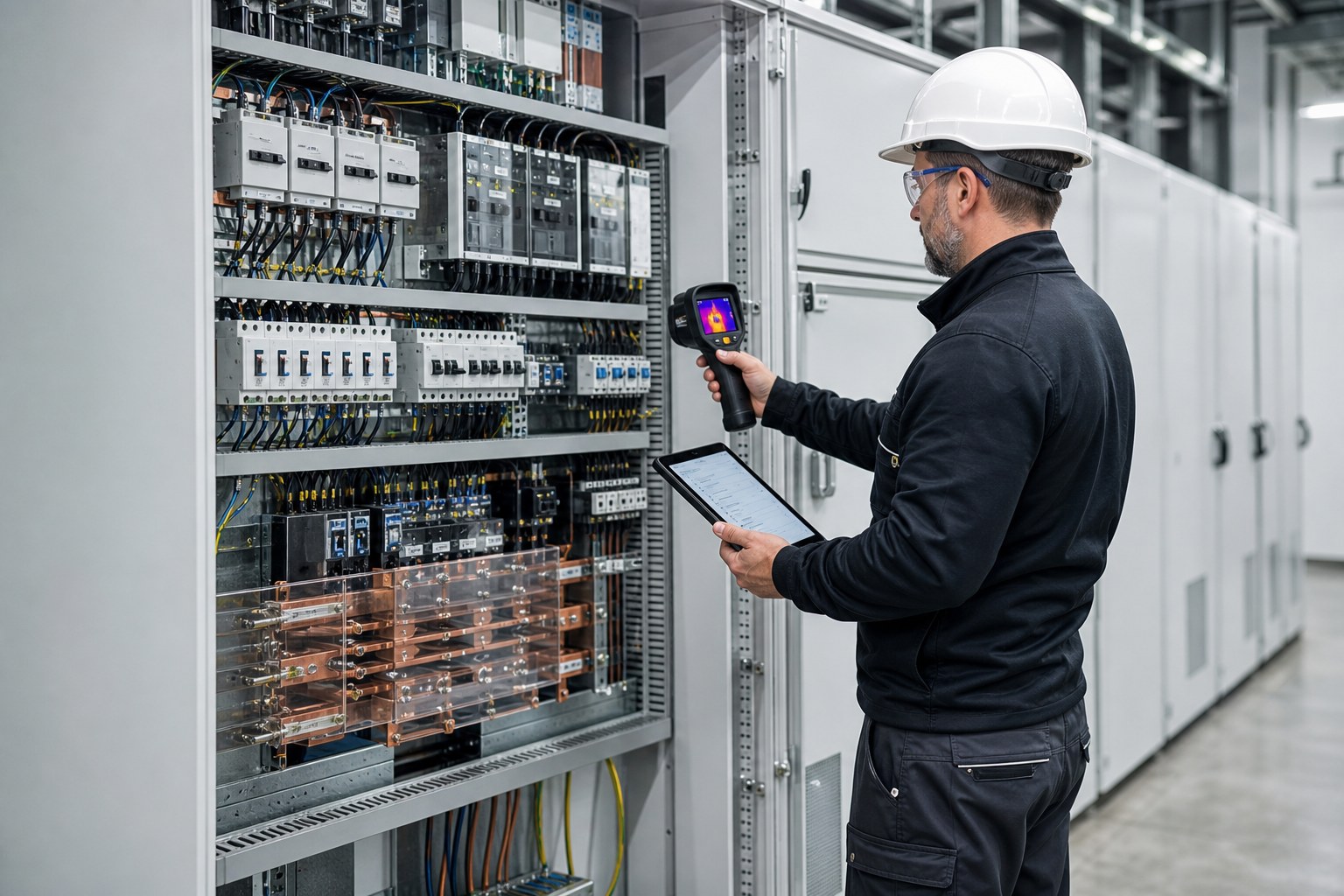
Non-intrusive assessment
Thermography reveals temperature differences invisible to the naked eye. In switchboards and electrical equipment, these differences can help locate poor connections, imbalances, overloads or abnormal component behaviour.
Where possible, inspection is carried out with the installation energised and under a representative load. Each result is interpreted in the context of operating conditions, equipment, environment and measurement limitations.
Connections and terminations, busbars, circuit breakers, fuses, contactors, cables, drives, transformers and other accessible components, depending on the installation and safety conditions.
A report identifying the points inspected, thermal and visible images, relevant conditions, faults found and recommendations organised by priority for assessment or action.
Method
Before the visit, we gather information on the installation, loads, history and access. On site, we confirm safe conditions, record thermal and visible images and compare equivalent components. The report distinguishes observations, limitations and recommended actions.
Thermography complements, but does not replace, statutory inspections, electrical testing, detailed diagnostics or maintenance performed by qualified professionals.
Frequently asked questions
Usually, yes. Inspection is more representative when the installation is energised and operating under its normal load, provided access and safety conditions allow it.
No. Thermography is a complementary diagnostic tool and does not replace electrical measurements, maintenance, statutory inspections or specific tests.
The report identifies the equipment inspected, presents thermal and visible images, describes the anomalies found and gives priorities and recommendations for assessment or action.
No. Interpretation takes account of load, comparison with similar components, materials, emissivity, environment and measurement conditions.
Many observations can be made while the installation is operating. What is possible depends on equipment access, safety conditions and site rules.
Prepare for the visit
Tell us the location, activity, switchboards to inspect and the times when the installation operates under a representative load. We will prepare the inspection scope.